

Practices with examples to: Reduce stress, improve mental wellness, and evolve.
The Memories
Have you ever reminisced and thought to yourself, "I haven't felt like that in years" or "Those were some good times".
I began saying these things to myself when I hit 13. Being at home sitting alone in my room reminiscing about all the fun my best friend and I used to play hopscotch on roller blades back in elementary, not skates, but roller blades.
I thought of how talented we were and we impressed each other. Now, mind you, I would still see my best friend just about everyday. She lived only a few blocks away.
After that day of reminiscing and thinking to myself, we had so much fun but we don't do those things anymore. Instead, we would climb trees and go swimming, riding our bikes up and down steep hills. My bike was always so rough and it would take so much energy going up the steep hills but I was determined because I knew it was going to be fun coming back down.
We enjoyed the winter also!
When it would snow, we would lay out on the snow making snow angels and mold the snow into a a bed.
We'd lay out there for hours until we could just stare at the stars.
Once we were done, we would go in and lay next to the fireplace. Our skin felt like needles and pins all over! But it was worth it to us.

Less Fortunate Than Others
One year later after this day, we were no longer close because my family and I had to move to a city nearby, about an hour away but felt like forever. My family moved around a lot.
After we moved into the nearby city, we kept in touch and she came to stay with me during that summer. It took time to get used to this because there were more roads and buildings than what I was used to.
My family was not as fortunate as others and we would go dumpster diving. My parents kept us safe and made sure that we didn't feel less fortunate than the other kids. Even though we didn't have the nice things that the other kids had, we were content with it.

"I was blind to the fact that dumpster diving was not something that families normally do."
I was blind to the fact that dumpster diving was not something that families normally do. And during that summer, she came along with us not knowing that's what the activity for the day was going to be. I hopped right into the dumpster as usual, excited and ready to find things that I have been wanting. These were clean dumpsters where grocery stores would throw away sealed/packaged food and drinks that haven't expired yet but nearing the expiration date.
When I hopped in there and found some pudding, I was ecstatic! I jumped up, head poking out of the dumpster, pudding in my hand held up high in the air yelling, "Look! We've got pudding! Come on Alice, come get some snacks!" with a big grin on my face.
My best friend's eyes grew big and the expression on her face was ... shocked, sad, and confused. She wasn't disgusted, she was concerned. She shook her head and went back to the car.
That's when I realized that I was inside an actual dumpster. Sure, the items may have been clean, sealed, packaged throw aways, but I was still in a dumpster ... picking through it.
After my friend left and went back home. I felt that I wasn't worth her friendship and that we were two different people. I didn't keep in touch much after the visit.
She would still call me and I would tell her how much I have changed, mentioning the negatives and trying to be cool at the same time.
I began running with the wrong crowd and the phone calls, gifts, letters... they all stopped coming. I didn't treat her with the same kindness she gave me. Not that I didn't want to but I just didn't think I was worthy. I didn't know why back then, but I know now.
I continued to make friends, but I wasn't good at keeping in touch or reaching out. When we would move, I would make empty promises to send letters and call. I just wasn't good at those things and couldn't understand why.
As I became older, I would admit to my friends that I am horrible at keeping touch. I didn't know why, but I know now.
I guess ever since my best friend, I would go to bed at night replaying the interactions I had that day in my head. Thinking, what could I have done differently or how I should've acted. Maybe certain situations would have played out better. I began molding myself and creating my mask.
Fast forward to my 40s. I now take off my mask now and then. I chip away at my own walls for myself. I have come to the realization that I have been in this identity crisis for over 40 years.
As the years gone on, I realized that I was creating coping mechanisms to deal with each life experience. I found things that helped me slowly unmask and become at peace with myself.
I would teach these coping mechanisms and daily habits to my children, as well as my friends. I noticed the positive mental changes it created and my friends would tell me how grateful they are for me being me. So... I thought to myself, why not share it with everyone?
I have decided simplify them and bring them down to only 5 daily habits. I do hope these daily habits will be simple enough for you to do and helps you with your journey.
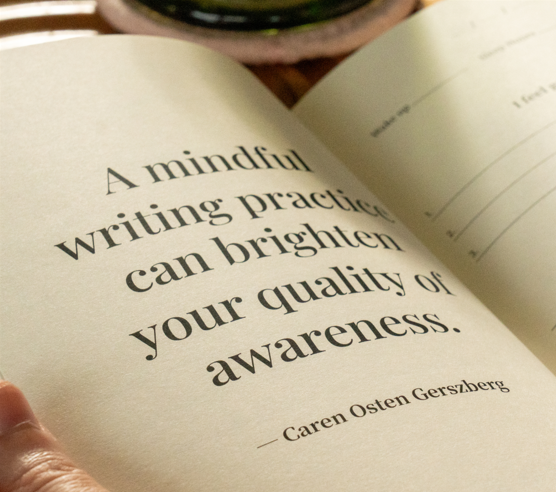
I'd like to start by mentioning that journaling makes practicing easier and can keep track of your progress. Click here for a great journal that's been effective for me and it may be for you as well.
Let's Get Into It!
Here are my 5 Daily Habits that has brought more peace into my life:
1. Be honest with yourself
Practice by reminiscing about both the good and the hard moments. Start small. Allow yourself to sit in your feelings without judgment. Accept what comes up—peace begins with truth.
Why: Honesty lets you stop performing and start healing.
Daily practice: Spend five minutes journaling one interaction from the day and one feeling you avoided.
Example: I write: “IT was wrong of me, but I continued …,” then name one small corrective action.
2. Remind yourself it’s okay to give yourself 100%
Even if you don’t fully know how yet. Start with something small that brings you joy or comfort.
Why: Giving yourself 100% will help improve mental wellness and clarity, self-awareness, reduce stress, and enhance emotional resilience. It will also help build stronger relationships! You won't need to rely on others to make you feel better about yourself. There are endless benefits to giving yourself 100%.
Daily Practice: Write a list of things that gets you out of your comfort zone. Then pick one thing out of that list to work on. Prioritize on what will be easier to start with that will help you grow and become your full self.
Example: Let yourself laugh loudly, save money for something meaningful, or simply exist as yourself—without shrinking. Peace grows when you stop holding yourself back.
3. Stay present in the moment
Peace doesn’t live in the past or the future—it lives in right now. Be grateful for the moments you have now.
Why: You don't want to miss out on the most important, most memorable experiences of your life. You may even create the one of the best memories for someone and it becomes something that they will carry in their hearts.
Daily Practice: Take the time to slow down and focus on your breathing, your surroundings, or even your thoughts. Even 10 minutes of mindfulness can reduce stress and improve emotional balance. [health.harvard.edu], [sciencedaily.com]
Example: I wasn't able to go to the river today to relax and listen to nature. But I was able step outside my complex and sit under a tree out front. I activated my tunnel vision (one of my super powers!) where I only focused on the mountains past the street with the busy traffic.
I focused on the mountains and the sky as I felt my bare feet melt into into the nice cool ground. I would either have earplugs to block out the loud noises, or headphones to either listen to music or meditation guides. This allowed me to let my imagination take me places where the mountains are.
I was very grateful to have this view in the front of my complex. Even though the mountains are far away, it was within view. - Practice gratitude as well. Gratitude is very important in our journey.
4. Practice self-compassion (talk to yourself kindly)
The way you speak to yourself matters.
Growth is not being perfect. Growth is being willing to look honestly at yourself without tearing yourself down.
Why: Research shows that mindfulness and self-awareness practices improve emotional well-being and reduce negative thinking. [pmc.ncbi.nlm.nih.gov]
Daily Practice: Turn your experiences into wisdom. Start writing down times where you felt you could have reacted differently or could have made better choices - self awareness. Then, in bullet points, write down reminders that you are growing, that it's okay because you are learning from this.
Life is full of obstacles, it all depends on how we handle things and how we view things (without judgement upon others or yourself). As we learn, grow, and apply those lessons, we continue to evolve into the fullest version of ourselves.
Example:
Instead of “I’m not good enough,” try:
“I’m learning.”
“I’m growing.”
“I did my best today."
-OR-
"I could have done that differently, and now I know better", rather than:
"I could have done that differently, so there must be something wrong with me."
5. Let go of what you cannot control
This is one of the hardest, but most freeing habits.
We can choose our actions, but we can't control everything that happens. Instead of trying to control it, learn to adapt.
Why: Letting go will reduce stress, increase mental clarity, prevent emotion burnout/exhaustion. You'll be able to focus more on the important things that truly matter.
Daily Practice: Allow yourself to be free from worry. Whenever you begin to feel yourself become worried about the changes, remind yourself the following:
- Give yourself permission to accept that some relationships are meant to change with time.
- Allow yourself to outgrow versions of yourself that no longer align with who you're becoming.
Example: Write down what certain outcomes, or situation, that you find yourself dwelling on and tell yourself:
What can I control?
- My attitude
- My effort
- My response
- My choices
- My next step
What can I not control?
- Other people's opinions
- Other people's actions
- The past
- The timing of outcomes
- Whether everything goes according to plan
Peace comes when you stop trying to control outcomes and start trusting your path. Put forth the effort for yourself - control your effort, not the outcome.
Learn the lesson. Keep the wisdom. Release the weight.
Printable coming soon!
Add comment
Comments